France’s Female Wine Revolution

Wine has traditionally been a man’s world, from winemakers to sommeliers to critics. There have been important exceptions, like champagne innovator Barbe-Nicole Ponsardin Clicquot of Veuve Clicquot fame, but women have generally been few and far between. Thirty years ago, fewer than 14% of the country’s wine estates were run by women.

But then women started working together, sharing knowledge and resources through regional winemaker associations. The first was in Bordeaux and they have since spread throughout the country. Today the number of French wine estates run by women has more than doubled, to over 30%.

How did they do it? Find out at France Today!

A Great Woman Winemaker

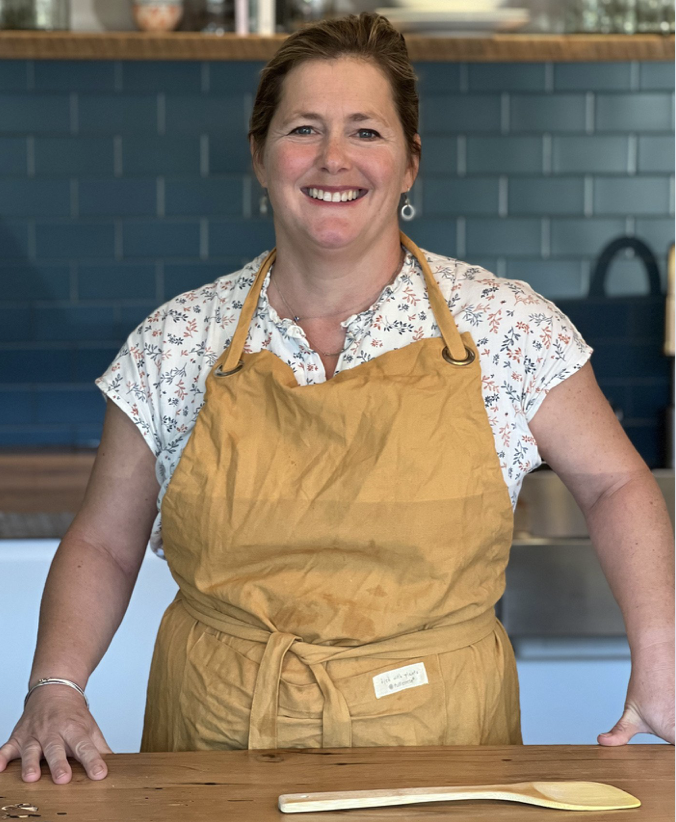
A few years ago, Val and I had the pleasure of meeting Françoise Roumieux, the owner and winemaker at one of the top wineries in Châteauneuf-du-Pape. As she told us about herself and her winery, we were both totally impressed by Françoise, not only as a winemaker, but also as a businesswoman and as a leader in the winemaking community.

This spring I had the opportunity to interview Françoise for France Today. We talked about the special pleasures and responsibilities that come with running a family business, what it has been like as a woman in a male-dominated industry, and more. Here’s the article for your reading pleasure.

Châteauneuf-du-Pape, in France’s Rhône Valley, is one of the country’s most important wine regions. Its richly-flavored wines are blends of up to 13 different grapes, and its vineyards are strewn with large rocks known as galets roulés. These capture the sun’s heat during the day and reflect it back to the vines at night, helping the grapes ripen.

Fine wine has been made here since the 14th century, when the papacy moved to nearby Avignon. The Pope’s summer palace was built above the town (Châteauneuf-du-Pape means “the Pope’s new chateau”) and vineyards were planted to serve his needs. You can still see remnants of the palace and enjoy wonderful views from there, looking out over the surrounding countryside.

An Historic Domaine

One of the notable wineries in Châteauneuf-du-Pape is Clos du Calvaire, which traces its history back to 1889. It was then that patriarch Gratien Mayard prepared to move to Argentina after the phylloxera epidemic devastated his vineyards. But Gratien’s love of his land proved too strong, and he instead stayed and painstakingly replanted his vineyards, vine by vine, with phylloxera-resistant root stock.

Gratien was not the family’s only pioneer. Decades later, his son Alphonse was one of the first to sell Châteauneuf-du-Pape by the bottle, rather than in bulk. He and his wife Marie-Louise expanded their business, selling their wines throughout Europe.

Their son Maurice inherited half of the estate, and managed it while also working as a highly-regarded wine broker. In 1989 Maurice passed the baton to his daughter Françoise, who soon revealed herself to be an unusual combination of top winemaker, astute businesswoman, and leader.

The 4th Generation

One of Françoise’s first important actions as the domaine’s 4th-generation leader was to expand the domaine. Her father had identified an opportunity to purchase a nearby winery, but it would mean taking on significant debt. Should she do it?

Like her ancestors, Françoise had both a vision and courage, and decided to pursue the expansion. After 20 years of careful financial management, she paid off the debt and turned to investing in a new winemaking facility. Her improvements to the winery continued last year when Françoise had a new tasting room built, with beautiful views over the domaine’s vineyards.

Making Her Mark

Each generation applies its own philosophy to winemaking. When it came her turn, Francoise maintained some of the domaine’s traditional practices but adapted others. She lowered yields and harvested later than her father had done, resulting in richer, more concentrated wines.

She also moved away from the use of pesticides and fertilizers. In 2006 she began a program of soil regeneration using rotating cover crops, known as agroécologie. Then she began instituting organic practices, plus the use of horses to plow the vineyards, and Clos du Calvaire received its organic certification in 2020.

Françoise’s focus on making excellent wines continues during the harvest, where grapes are hand-picked and placed in small baskets to avoid damaging them. Then, after sorting, the best grapes are pressed into juice, beginning the process of blending and maturing the wine. Françoise has an exceptional palate, and her wines have routinely received top scores.

A Woman in a Male-Dominated Industry

When Françoise began her career, she was one of relatively few women running a winery. “It was sometimes hard at first,” she says, “but also a benefit. As a woman I stood out, and that helped my domaine receive attention. I also have an open and conciliatory style, and I think that helped.”

The lack of women in the wine business is one of the reasons Françoise helped found Femmes Vignes Rhône in 2004, one of the first women’s winemaking associations in France. “We wanted to normalize the idea of women winemakers, and we share knowledge and best practices among ourselves. We also work together at wine fairs, with joint booths and by organizing meetings with potential clients. Together we have more force than if we act individually.” Françoise led the organization for 11 years, and today an increasing number of wineries in the region are led by women.

Running a Family Business

One of things that makes running a family business special, especially one that goes back over a century, is the sense of responsibility. “I’m very invested in our mission,” says Françoise. “I want to pass on a legacy to my descendants, and to see our winery continue long into the future. The success that we’ve had so far is very fulfilling, very gratifying.”

“And I get to work with my children!” she adds. “It is a great pleasure, but also a responsibility, because I have to make sure they understand everything. Not only is there the winemaking from vineyard to bottle, but also distribution, finance, export, and today social media. It is much more complicated than when my father taught me.”

The Next Generation

She has taught her children Coline and Nicolas well, and a few years ago turned winemaking responsibility over to them, while she acts as an advisor.

Just as Françoise’s winemaking style was different from her father’s, so Coline and Nicole have made changes that mark their own approach. They pick their grapes earlier to maintain freshness and balance. They have also begun aging some of their wines in clay amphora, which adds complexity.

These 5th-generation winemakers have continued the domaine’s high standards—their wines receive top marks, including a rare 100-point score from the prestigious Revue de France.

Visiting Clos du Calvaire

If you’d like to learn more about Clos du Calvaire, you can stop by their winery just outside of Châteauneuf-du-Pape. “We love visitors,” says Françoise. “It gives us pleasure to show people our vineyards and our winemaking facilities. We take the time to explain, to share. We hope your readers will visit us.”

Practical Information

Clos du Calvaire, 1973 Route de Châteauneuf du Pape, 84700 Sorgues

Website: https://www.clos-du-calvaire.fr
 

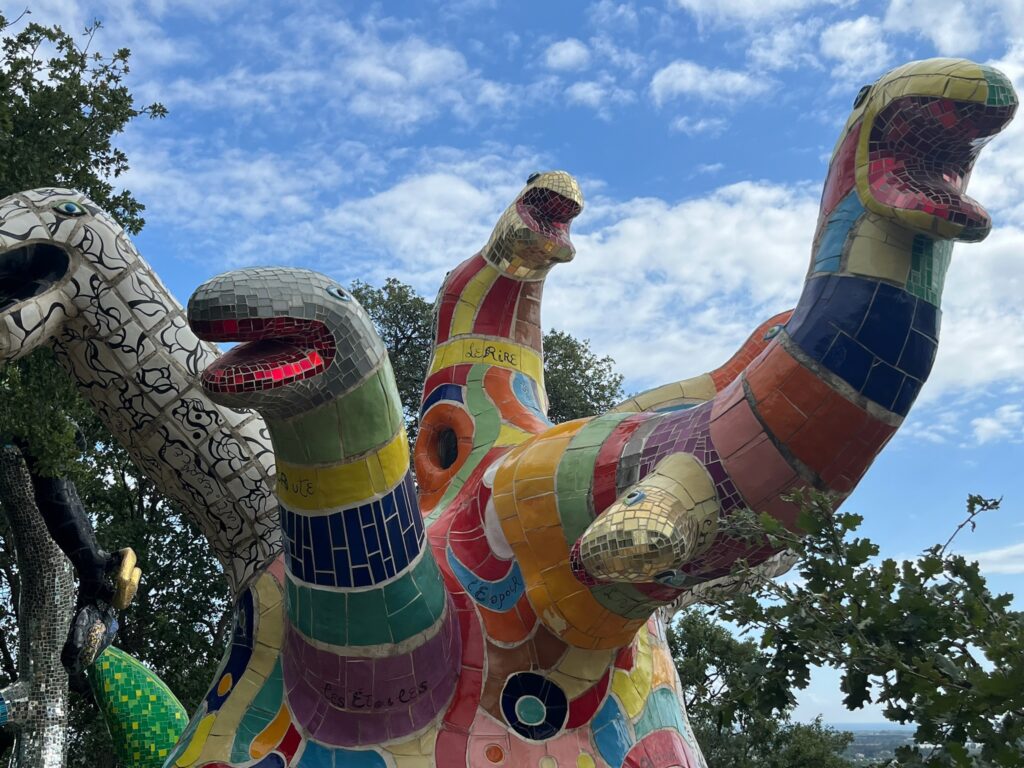
The Tarot Garden of Niki de Saint-Phalle

Niki de Saint-Phalle was a French-American artist who was ahead of her time. She was a performance artist before it was a thing, created perfumes with her own branding before others copied her, had a personal style so confident that Gloria Steinem called her “the first free woman I’ve ever seen,” and was a remarkable artist.

Her masterpiece is the Tarot Garden in southern Tuscany, where she created huge, colorful sculptures of the 22 major arcana of the tarot. It was inspired by Gaudi’s fantastical Parc Guell in Barcelona, and having seen both I have to say that Saint-Phalle has surpassed the master.

The Tarot Garden is spread over 14 acres and each sculpture is stunning. They are so intricate that it took Saint-Phalle over two decades to create them all, and one is so big that she lived inside it while she worked!

To learn more about Niki de Saint-Phalle and her art, and to see beautiful photos of the Tarot Garden, check out this article in Frenchly!

Living Between Two Worlds

Florence Melin is a French woman who has lived in the United States for half her life, and also visits France every year. We met through a mutual friend and had a very interesting conversation, as I’m a little bit the opposite of her: an American who lives part-time in France.

I really appreciated Florence’s thoughts on how the US compares to France. She is able to see the good points of each country, along with the occasional frustrations. I could relate when she said there are some things you can never really understand about your new country, like events from childhood and are part of the collective cultural memory.

You can read about how Florence sees the two countries in My French Life!

The Great Women of France, Part 3

Who are the great women of France? There are so many, it is hard to list them all! But let’s start with 15 who have played important roles in the history of la belle France.

There is so much to say that I’ve divided my list into three different articles, each discussing five women. This third article covers the 20th century.

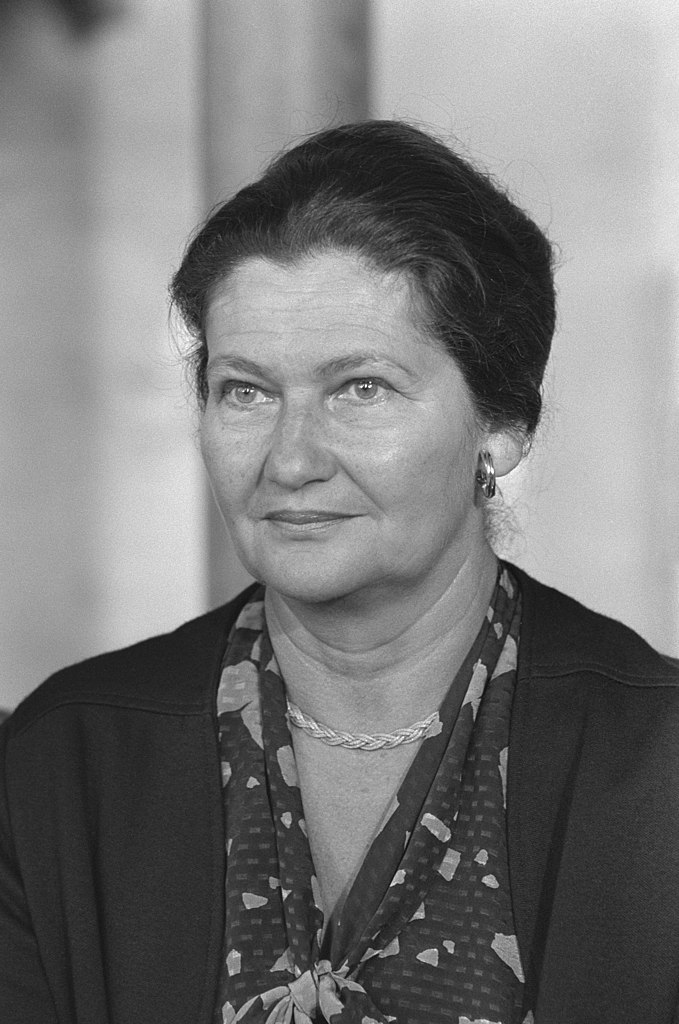
Some of the women you are probably familiar with, like the great Marie Curie, winner of not one but two Nobel Prizes. But how about Nadia Boulanger, who taught some of the century’s greatest composers? Or Simone Veil, the Holocaust survivor who became one of France’s most important political figures? And did you know that Coco Chanel, the brilliant couturière, was also a Nazi collaborator?

Read all about these and other great women of France in My French Life!

The Great Women of France, Part 2

Who are the great women of France? There are so many, it is hard to list them all! But let’s start with 15 who have played important roles in the history of la belle France.

There is so much to say that I’ve divided my list into three different articles, each discussing five women. This second article covers the 17th, 18th, and 19th centuries.

Some of the women you are probably familiar with, like the author George Sand. But did you know that the mathematician Emilie de Chatelet not only corrected some of Isaac Newton’s theories, but also developed an early form of financial derivatives? Or that Berthe Morisot was considered one of the finest of the Impressionist painters? And how about the salonnières, the women who ran the famous salons of the Enlightenment, sometimes called “the cradle of the French Revolution”?

Read all about these and other great women of France in My French Life!

12 Influential French Women to Know

France was behind many countries in granting women the right to vote, doing so only in 1944, but a lot of progress has been made since then. Today French women hold top roles in politics and business: the prime minister and the mayor of Paris are women, as are the heads of some of the most important companies and financial institutions. Women are leading lights in the worlds of art and entertainment and are some of the country’s greatest chefs.

Would you like to meet a few? I’ve written about a dozen of them, all immensely talented. And soon I’ll share a series of articles about some of the greatest women in French history, from Eleanor of Aquitaine to Madame Curie, and many more.

Read all about 12 of today’s most influential French women in France Today!

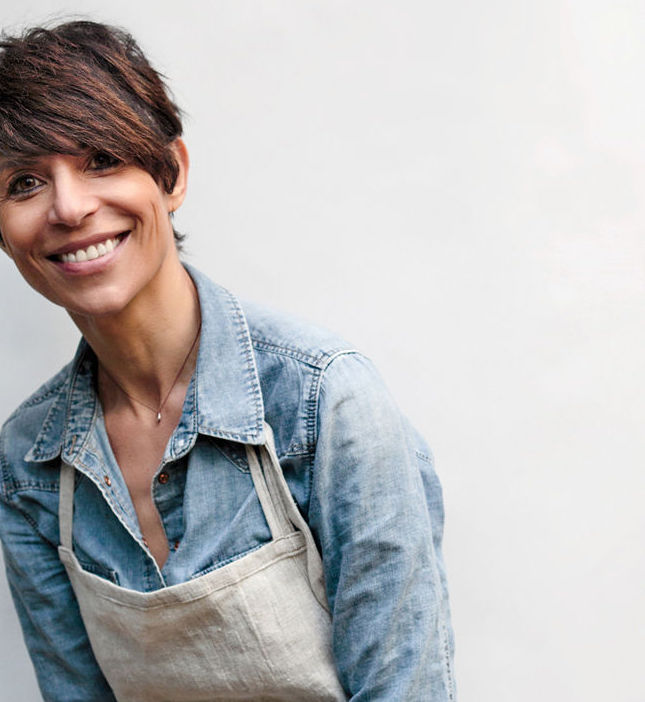
Dominique Crenn, Rebel Chef

Dominique Crenn is one of the world’s greatest chefs, and her flagship restaurant in San Francisco has been awarded three Michelin stars. Known for her creative cuisine, Crenn has recently published her autobiography Rebel Chef: In Search of What Matters. It’s a fascinating look at a fascinating person.

Crenn’s has been an unusual journey, and she is not your usual chef. As an infant she was adopted by a couple in Brittany, her father a Resistance hero and a friend of Charles de Gaulle. Despite being raised by a traditional French family, Crenn never quite fit into the conservative France of the 1960s. One reason was her looks—part of her heritage is North African. Plus she was a tomboy with a crush on Olivia Newton-John. And then there was the matter of cooking. Crenn longed to be a great chef, and why not? “But the top restaurants are for men!” she was told. “Women cook at home.”

Read all about this rebel chef in France Today!

A Small-Group, Women-Only Wine & Food Tour in the South of France

I know I’m biased, but I think the South of France is the most beautiful place in the world. And springtime is the best time to visit—it’s warm and sunny and the markets are full of succulent fruits and vegetables.

If you have always dreamed of visiting this lovely area, here’s an idea for you. A friend of mine, Sarah Covey, is organizing a small-group, women-only wine and food tour that starts on June 1. Sarah is a wine professional, a food lover, a French speaker, and a thoroughly delightful person—you can’t help but like her!

There are a few spots left on Sarah’s next trip, so maybe it’s time to make your dream come true! If you’d like to learn more, here’s her website: Vibrant Travelers.

Bon voyage!

The Four Queens of Provence

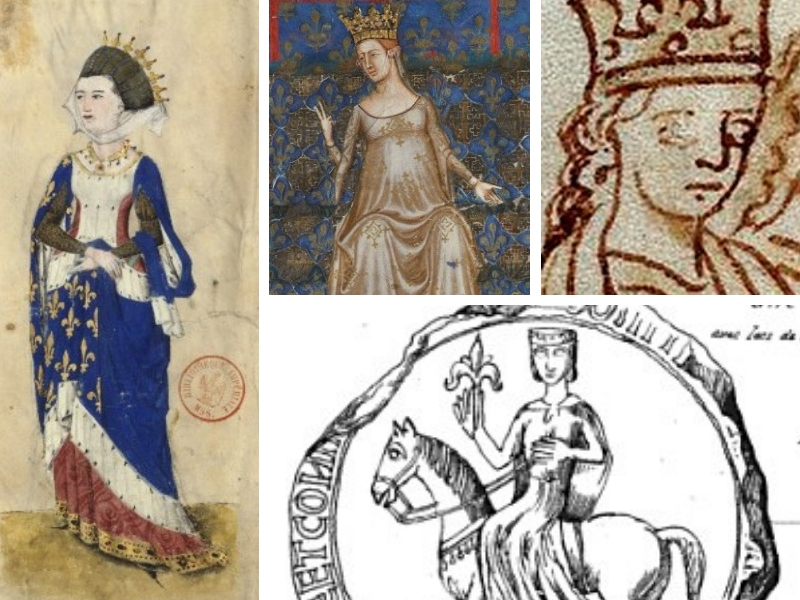
There have been many famous families in history. Take the Curies, for example: Marie Curie won two Nobel Prizes and her husband, daughter and grandson each won one. Quite the talented family! And then there are the Wright brothers and the Brontë sisters. And let’s not forget those comic masters, the Marx brothers.

But imagine a family where not one, not two, but four sisters become queens, each heading a great European power. It’s hard to believe, but it actually happened in the 13th century! It’s a tale of Pride and Prejudice meets Game of Thrones…

Read the whole story at The Good Life France!