Vignettes of Life in France

Val and I spend part of the year in France, mostly in St-Rémy-de-Provence, but we also travel around the country from time to time. I thought I would share of a few stories of what our life here is like.

Getting Sneaky

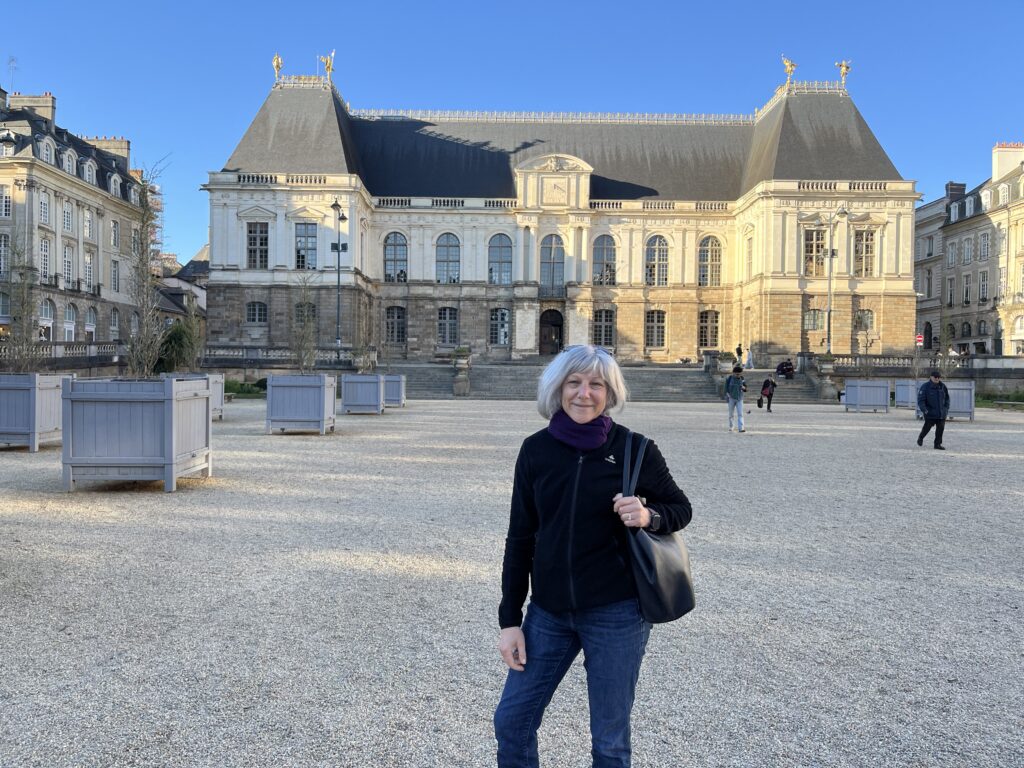
Rennes is a beautiful town, full of half-timbered houses, and also the former capital of Brittany. We stopped over for a night on the way to see some friends, and we were advised not to miss the Brittany Parliament building, which is quite beautiful inside. Unfortunately, it now houses an appeals court and when we entered, a scary armed guard informed us quite firmly that only guided tours were allowed.

We slunk outside and researched these tours, only to find there were none that day. While we were searching on our phones to decide what to do next, a lady nearby asked us where we were from. She had come outside from the parliament building to have a smoke, and we had a nice chat. Then Val and I went back to checking our phones.

While Val scrolled away, I decided to be a little sneaky and told the lady it was a shame we couldn’t see the inside, as we had come all the way to Rennes and would be leaving soon. “No problem” she said, “come in with me.”

She the proceeded to breeze past the scary armed guard (“They’re with me”) and give us a tour of the place. It was so nice! It’s good to be a little sneaky sometimes.

Cocorico!

Our place in St-Rémy is across the street from a Catholic elementary school. Every weekday, we hear kids playing outside during lunch and recess. And sometimes there are school events for the parents where we hear music and laughter and raffle numbers being called out. It’s all quite charming

We learned last year that the priest lives in an apartment attached to the school. Aha, we thought, that explains all the chickens in the yard. I guess the priest likes eggs.

This year we discovered a new resident, a rooster. I say “discovered” because we heard him before we saw him. And heard him. And heard him! This is one enthusiastic rooster. It’s cocorico all day long, which is the French equivalent of cockadoodledoo. Even our friends who live two blocks away can hear him.

But he must be a happy rooster, the only male among a bunch of hens. I imagine he wakes up every morning and says to himself, “Baby, I’m going to go forth and multiply!”

A Provençal Bottleneck

We were driving to a nearby town when we suddenly found ourselves in a long line of cars, all stopped for some reason. The road bent about 20 cars ahead so we couldn’t see what the problem was. Road work? An accident? An alien sighting?

We checked Google Maps to see how far ahead the blockage was, but it said everything was fine. That meant that whatever happened was so recent that Google hadn’t yet caught up. This ruled out road work, and we didn’t hear any sirens that would indicate an accident, so I was really hoping for that alien.

Then traffic started to move and when we got around the bend, we saw what had caused the slowdown: a shepherd had moved his flock from one side of the road to the other. But of course! This happens regularly.

Maybe we need some sheep-crossing signs.


Where do the French go on Vacation?

France is the world’s most popular tourist destination, but where do the French like to take a vacation?

It is probably no surprise that France is their favorite destination, whether it is for a summer or a winter holiday. But what about other countries?

A French travel organization reports on this every year, including information on who is rising and falling (Vietnam is climbing the ranks!)

To get an idea of French taste in travel, you can read about it in My French Life!

Rest Stops in France

If you are driving through France and need a place to stretch your legs, use the facilities, and maybe get something to eat, where do you go? Especially if there is not a decent-sized town for miles?

The answer: an aire.

An aire is what English-speaking countries call a rest stop, motorway service area, lay-by, or something similar. Aires are generally clean, convenient, and well-maintained.

Like rest stops, there are different kinds of aires in France.

Read about aires and how to find them in The Good Life France!

A Magical French Sculpture Park

Charente-Maritime is a small département in western France, wedged between Bordeaux to the south and Brittany further north. It makes up part of France’s Atlantic coastline and is best known for places like the fortified seaport of La Rochelle and Île de Ré, a favorite vacation spot for Parisians seeking sun and sea.

Charente-Maritime also hosts Rochefort, where artisans painstakingly recreated Hermione, the frigate that Lafayette sailed to bring aid to the American Revolution. And it was on the nearby island of Aix that Napoleon last touched French soil before his exile in St. Helena.

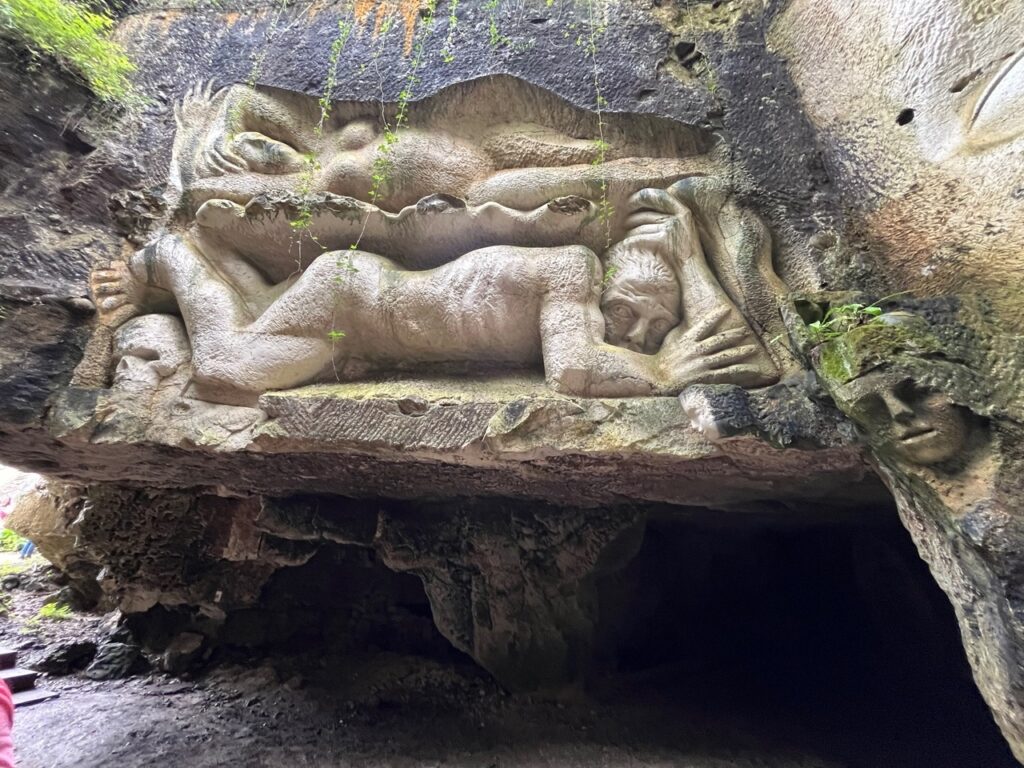
But not all of Charente-Maritime’s charms are seaside. If you go inland a few miles, you’ll find a little-known treasure: one of the world’s great sculpture parks, Les Lapidiales.

A History of Stone

The region has been a source of stone since Roman times, and near the town of Pont-d’Envaux sits an abandoned quarry that has been worked since the 12th century. It is in a quiet area, in the middle of a forest—not a place you would visit unless you had a reason to.

In 2001 Alain Tenenbaum, a local artist, created that reason. He had the idea of turning this quiet spot into a sculpture park. So he began raising funds and when he had enough he started inviting sculptors.

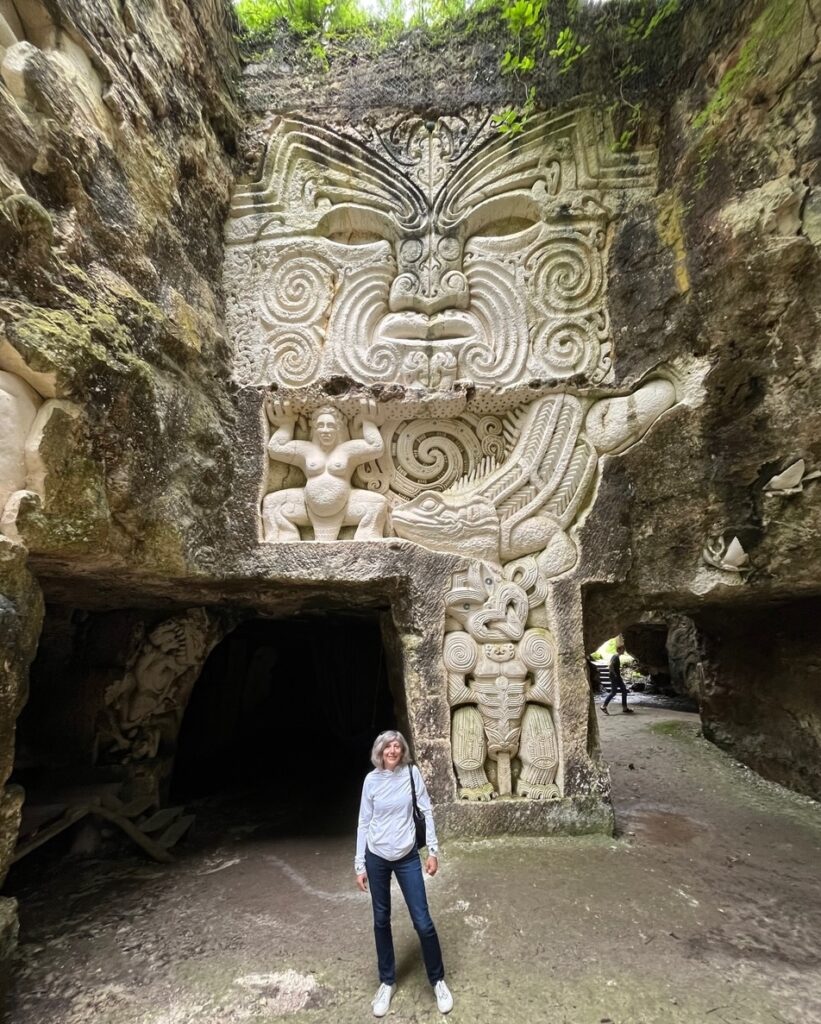
One of the features of the quarry is that it is full of vertical walls, perfect for carving. Tenenbaum separated the quarry into zones, each with a different theme, then let the sculptors have at it. The walls of the quarry are big—some as high as six meters—so the carvings are very large.

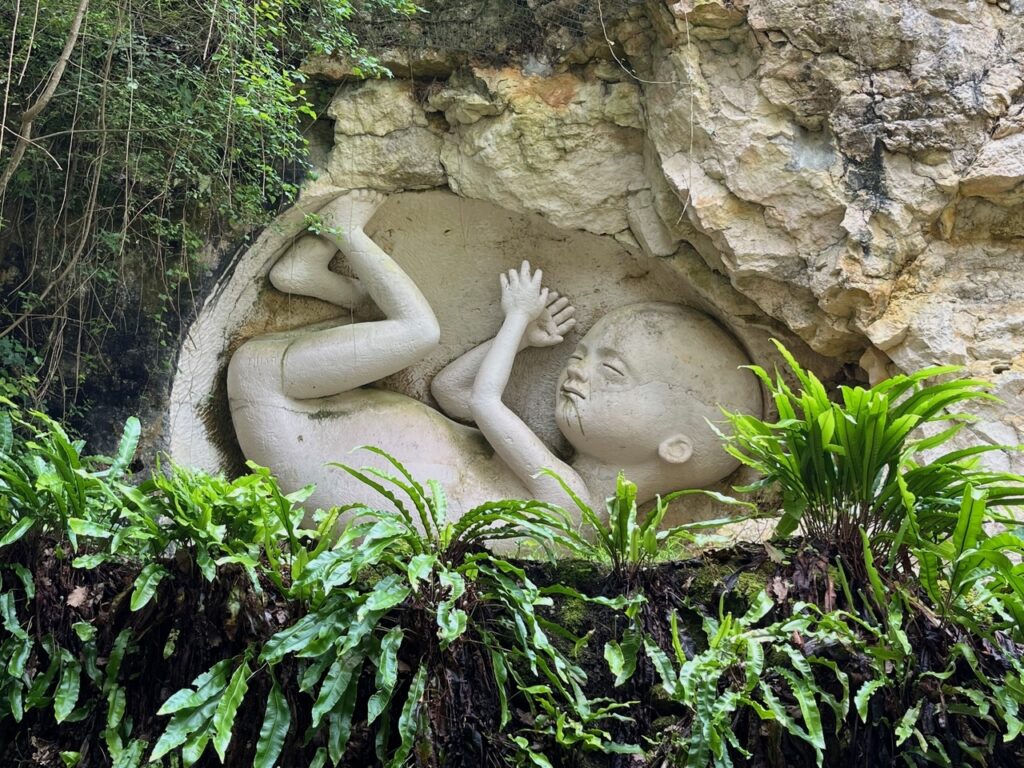
Step by step, year by year, the quarry was transformed. Dozens of sculptors from around the world came and carved, each leaving their mark. And the results are quite extraordinary.

https://www.youtube.com/watch?v=dHPBfVfXEeQ

But there’s one problem: the quarry has run out of space.

A Galaxy of Art

So Alain Tenenbaum, never one to rest, had a new idea. He would create a sister site, La Galaxie des Pierres Levées (the galaxy of raised stones.)

Near Les Lapidiales, Tenenbaum built his new sculpture park, this time in a large field. The theme is world culture, featuring art from the five continents. Tenenbaum has arranged hundreds of stone pedestals in the form of a spiral, as his idea is to create a showcase of art, expanding ever outward like a galaxy.

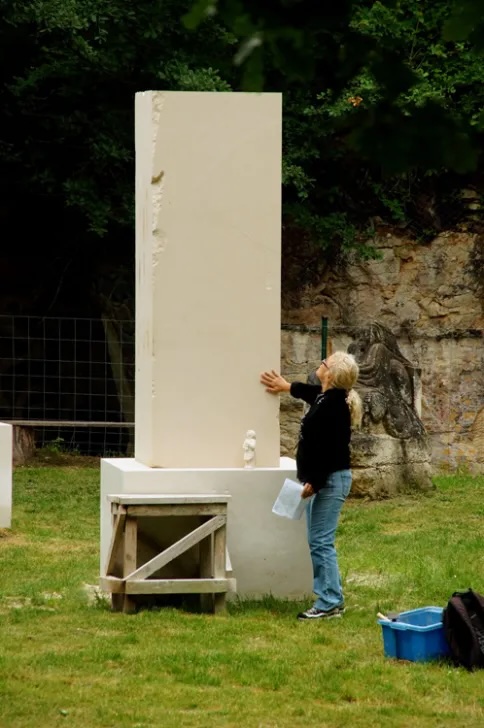
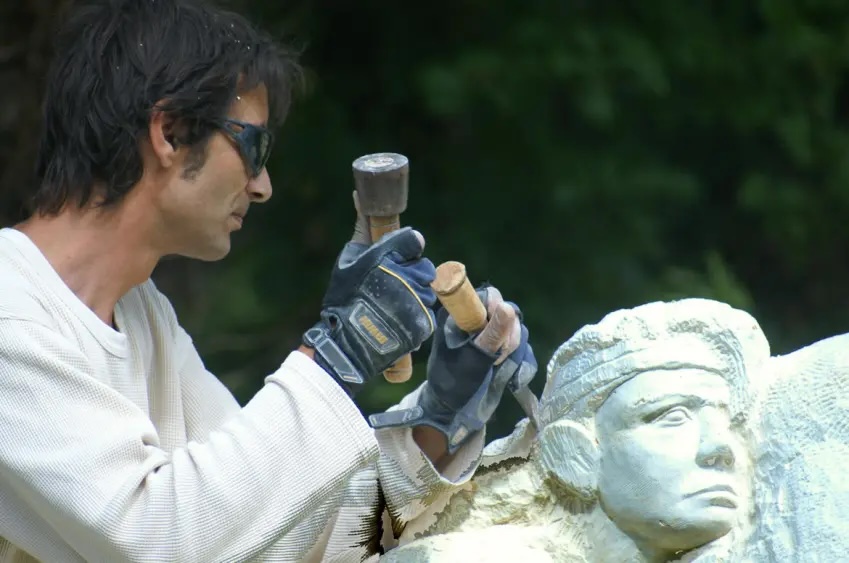
Every year, 5-7 sculptors are invited to be artists in residence. They are given a monolith—a block of stone about 2.5 meters high. This they carve over a period of several months, and the resulting sculpture is mounted on one of the pedestals in the galaxy. To date there are over 60 completed sculptures, with the goal of eventually having 2-300.

World Culture

The program began in 2012 and each year artists are invited from a different part of the world, such as the Caribbean and the Baltic Sea—this year from Japan and Korea. They do their sculpting at the entrance to Les Lapidiales, so you can admire their work as it takes shape, and sometimes have a chat.

The goal of the program is not only to create new art for the Galaxy, but also to share the culture of the artists’ home region. So during their residency, they visit local schools to discuss their country and its culture, sometimes accompanied by poetry readings or short theatrical productions.

Today Les Lapidiales and La Galaxie des Pierres Levées attract over 75,000 visitors a year, but they are big enough that they are never crowded. This is certainly a unique spot to consider for visitors to this western corner of France.


A Gem on France’s Mediterranean Coast

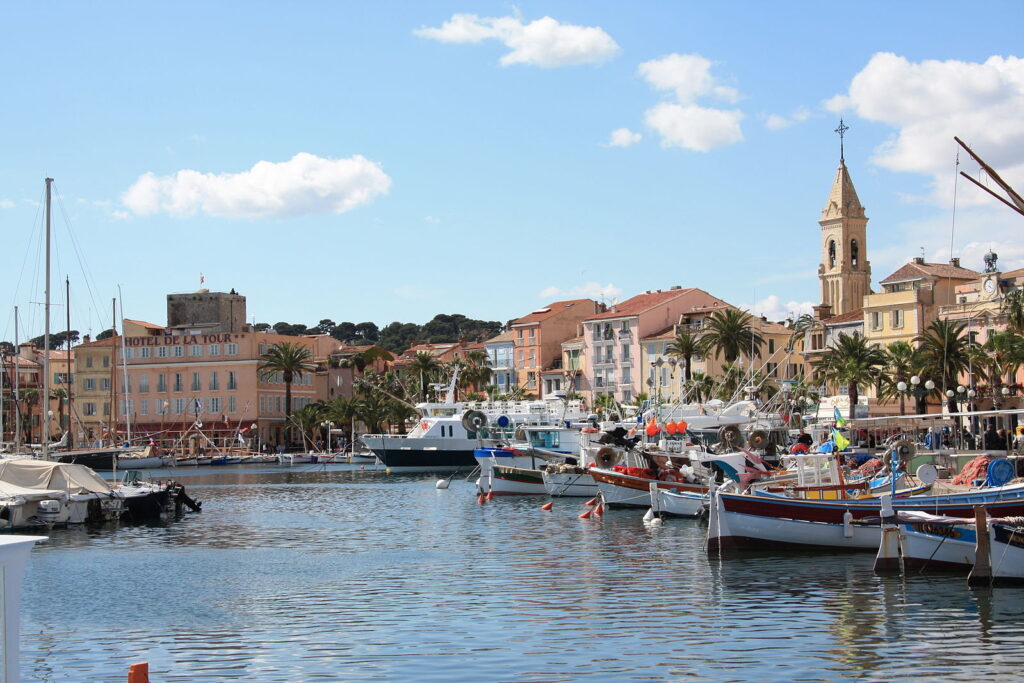
It’s one of the prettiest towns on France’s Mediterranean coast and one of the country’s sunniest. But while international tourists flock to Nice, Antibes, and St-Tropez, lovely little Sanary-sur-Mer remains relatively undiscovered.

Sanary was founded as a fishing village in the 16th century. Fishermen still ply their trade there, and today the town is a popular retirement destination for the French, with its bustling shops and cafés and one of the best weekly markets in France.

Read all about this pretty coastal town in Perfectly Provence!

A Dog’s Life in France

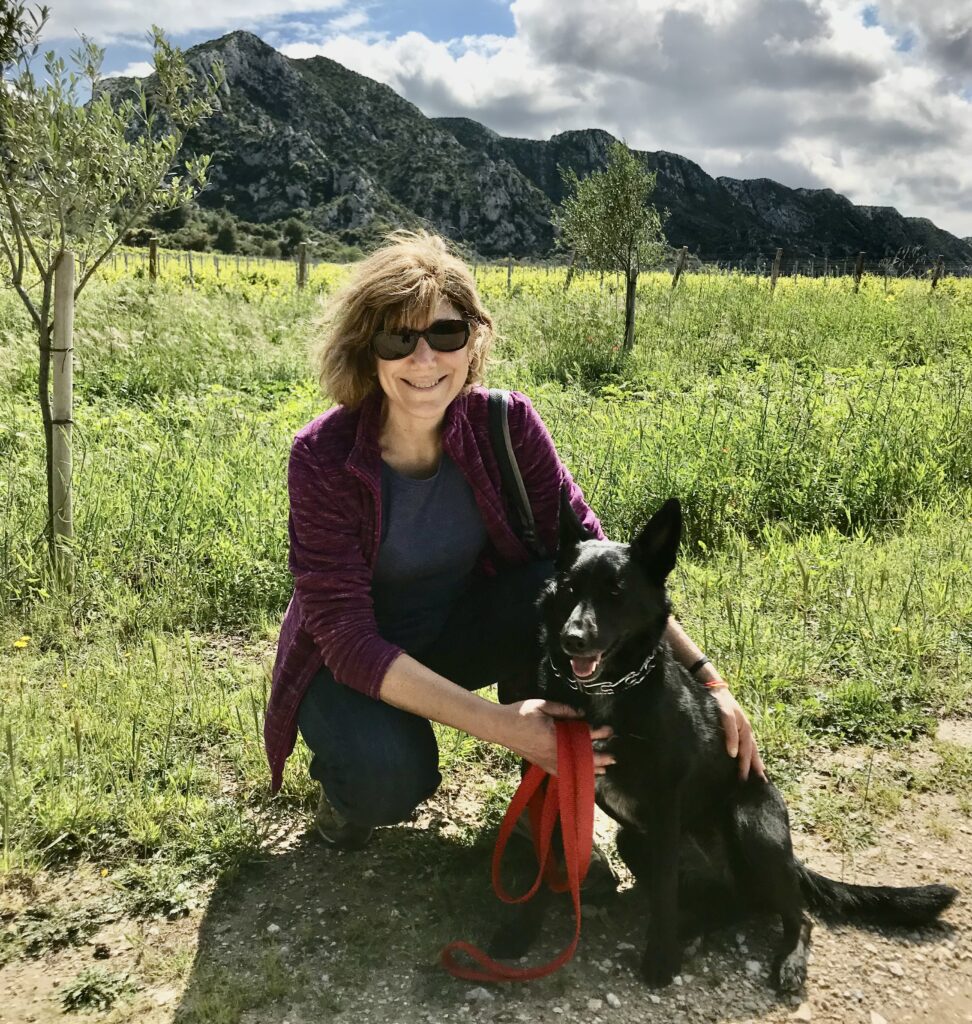
Ever since we got married, Val and I have had a dog. First there was Rodin, who moved with us to Switzerland when we took jobs there. Then there was Lucca, who flew back and forth from California to Provence when we started living there part-time. Now it’s Mica, our cute little border collie mix, who has traveled between our two homes plenty of times. 

Mica’s not crazy about the long flight (neither are we), but once she gets to France she loves her life there. And we love our life with her–she keeps us active, helps us meet people, and shares her love all around.

I’ve written a fun little article about having a dog in France that you might enjoy, in France Today.

The Beating Heart of St-Rémy

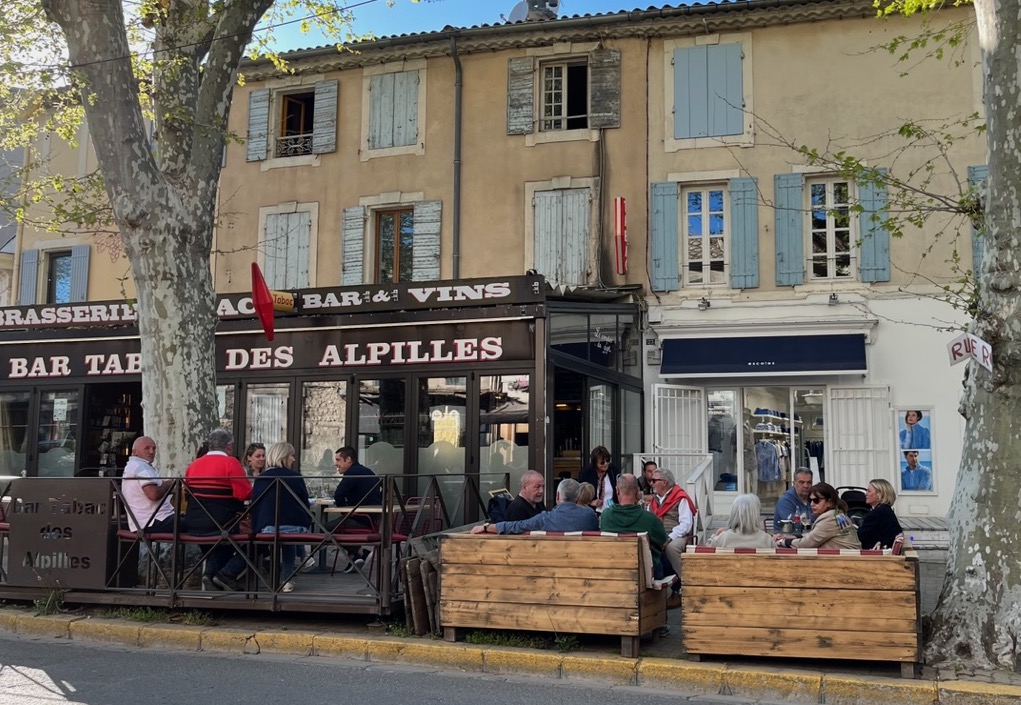
St-Rémy has a lot of great cafés and restaurants, but there’s one that really stands out: the Bar-Tabac des Alpilles.

It’s not just that the food is good, it’s also that it’s comfortable any time of day. Whether it’s a coffee and croissant before hitting the weekly market, a glass of wine in the afternoon, or a delicious meal, you can find it here. And even more, it’s an important part of the local fabric of St-Rémy, while also being welcoming to tourists.

Sitting at your table, you might hear Americans on one side of you discussing their travel plans and, on the other side, there will be workers unwinding after a long day. Patrick, the owner, calls his place “A mix of modern tourism and local identity.” It’s family-friendly, and I often see kids there with their parents, having a Coke or a juice. It’s a must-stop for your next visit to St-Rémy.

Read all about it in Perfectly Provence!

See the Best of Provence in One Week!

Provence is one of the most popular regions of France, and for good reason—think fields of golden sunflowers and lazy afternoons sipping rosé. Visitors flock to two main areas, the glamorous Côte d’Azur in the east, and the lavender-scented western part made famous by A Year in Provence.

These are so far apart that it’s hard to cover both in a week, so I’ve written a guide to the western part, home to famous towns like Avignon and Aix-en-Provence. It provides you with an itinerary with a mix of historical sites, charming hilltop villages, and some of the best restaurants in Provence. The stops are in no particular order, so you can mix and match as you please.

Read all about it in Frenchly!