A few years ago, Val and I had the pleasure of meeting Françoise Roumieux, the owner and winemaker at one of the top wineries in Châteauneuf-du-Pape. As she told us about herself and her winery, we were both totally impressed by Françoise, not only as a winemaker, but also as a businesswoman and as a leader in the winemaking community.
This spring I had the opportunity to interview Françoise for France Today. We talked about the special pleasures and responsibilities that come with running a family business, what it has been like as a woman in a male-dominated industry, and more. Here’s the article for your reading pleasure.

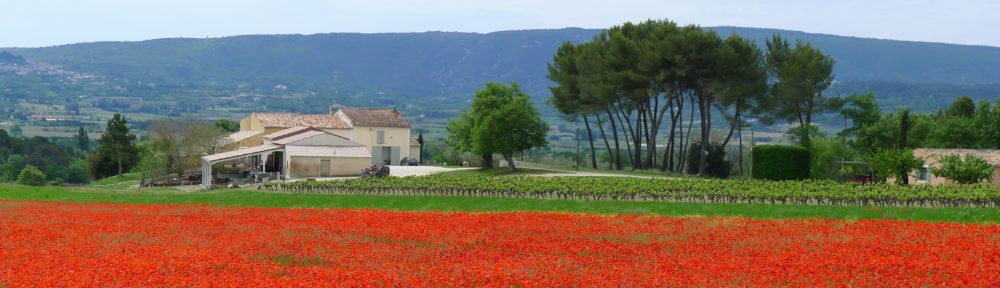
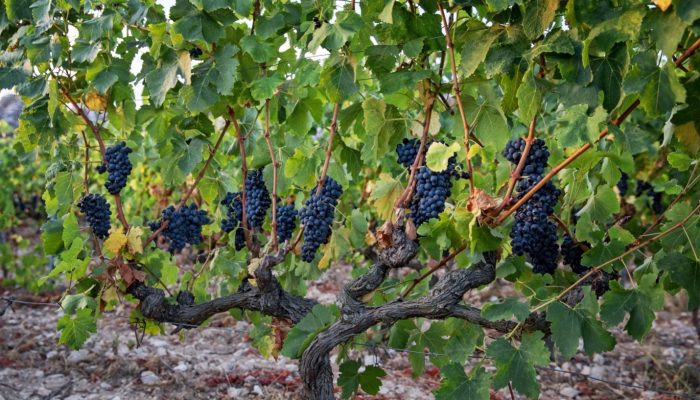
Châteauneuf-du-Pape, in France’s Rhône Valley, is one of the country’s most important wine regions. Its richly-flavored wines are blends of up to 13 different grapes, and its vineyards are strewn with large rocks known as galets roulés. These capture the sun’s heat during the day and reflect it back to the vines at night, helping the grapes ripen.

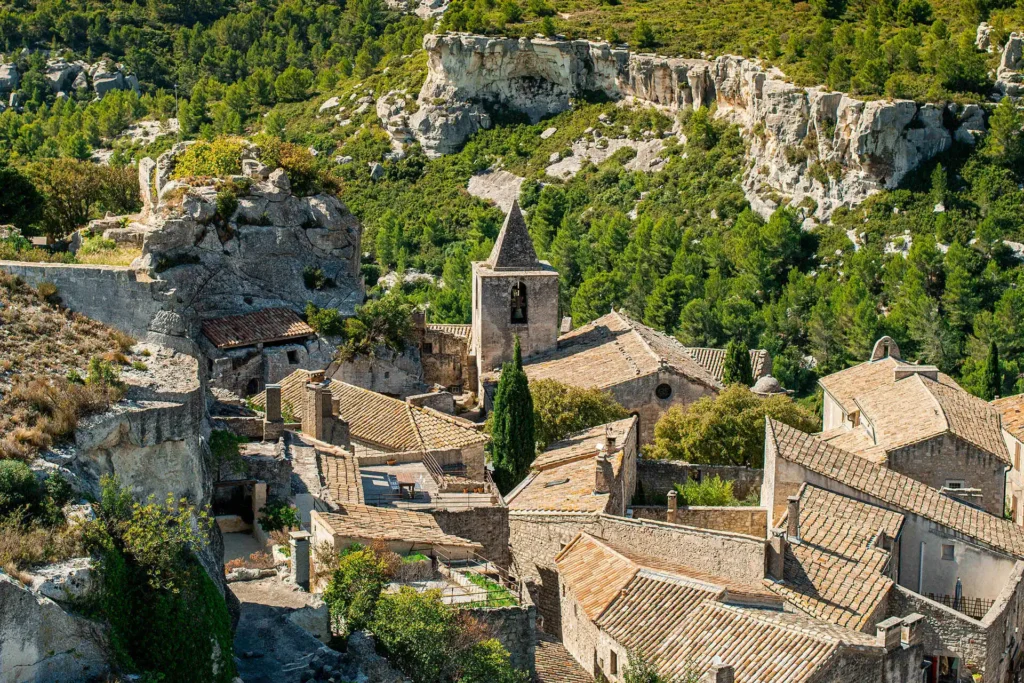
Fine wine has been made here since the 14th century, when the papacy moved to nearby Avignon. The Pope’s summer palace was built above the town (Châteauneuf-du-Pape means “the Pope’s new chateau”) and vineyards were planted to serve his needs. You can still see remnants of the palace and enjoy wonderful views from there, looking out over the surrounding countryside.
An Historic Domaine
One of the notable wineries in Châteauneuf-du-Pape is Clos du Calvaire, which traces its history back to 1889. It was then that patriarch Gratien Mayard prepared to move to Argentina after the phylloxera epidemic devastated his vineyards. But Gratien’s love of his land proved too strong, and he instead stayed and painstakingly replanted his vineyards, vine by vine, with phylloxera-resistant root stock.
Gratien was not the family’s only pioneer. Decades later, his son Alphonse was one of the first to sell Châteauneuf-du-Pape by the bottle, rather than in bulk. He and his wife Marie-Louise expanded their business, selling their wines throughout Europe.
Their son Maurice inherited half of the estate, and managed it while also working as a highly-regarded wine broker. In 1989 Maurice passed the baton to his daughter Françoise, who soon revealed herself to be an unusual combination of top winemaker, astute businesswoman, and leader.
The 4th Generation
One of Françoise’s first important actions as the domaine’s 4th-generation leader was to expand the domaine. Her father had identified an opportunity to purchase a nearby winery, but it would mean taking on significant debt. Should she do it?

Like her ancestors, Françoise had both a vision and courage, and decided to pursue the expansion. After 20 years of careful financial management, she paid off the debt and turned to investing in a new winemaking facility. Her improvements to the winery continued last year when Françoise had a new tasting room built, with beautiful views over the domaine’s vineyards.

Making Her Mark
Each generation applies its own philosophy to winemaking. When it came her turn, Francoise maintained some of the domaine’s traditional practices but adapted others. She lowered yields and harvested later than her father had done, resulting in richer, more concentrated wines.

She also moved away from the use of pesticides and fertilizers. In 2006 she began a program of soil regeneration using rotating cover crops, known as agroécologie. Then she began instituting organic practices, plus the use of horses to plow the vineyards, and Clos du Calvaire received its organic certification in 2020.

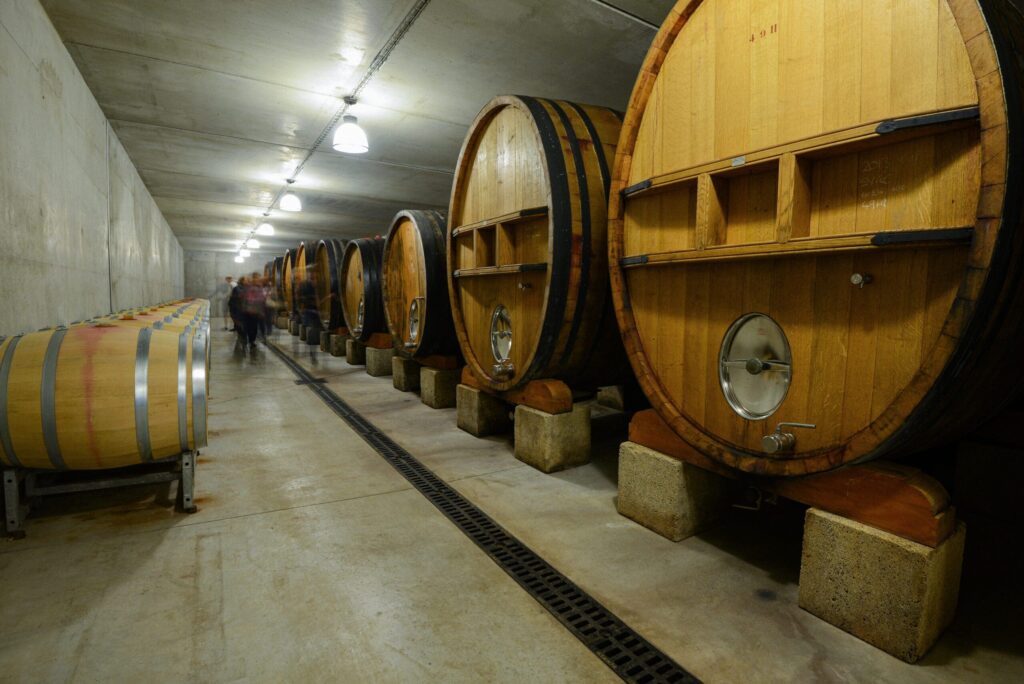
Françoise’s focus on making excellent wines continues during the harvest, where grapes are hand-picked and placed in small baskets to avoid damaging them. Then, after sorting, the best grapes are pressed into juice, beginning the process of blending and maturing the wine. Françoise has an exceptional palate, and her wines have routinely received top scores.
A Woman in a Male-Dominated Industry
When Françoise began her career, she was one of relatively few women running a winery. “It was sometimes hard at first,” she says, “but also a benefit. As a woman I stood out, and that helped my domaine receive attention. I also have an open and conciliatory style, and I think that helped.”

The lack of women in the wine business is one of the reasons Françoise helped found Femmes Vignes Rhône in 2004, one of the first women’s winemaking associations in France. “We wanted to normalize the idea of women winemakers, and we share knowledge and best practices among ourselves. We also work together at wine fairs, with joint booths and by organizing meetings with potential clients. Together we have more force than if we act individually.” Françoise led the organization for 11 years, and today an increasing number of wineries in the region are led by women.
Running a Family Business
One of things that makes running a family business special, especially one that goes back over a century, is the sense of responsibility. “I’m very invested in our mission,” says Françoise. “I want to pass on a legacy to my descendants, and to see our winery continue long into the future. The success that we’ve had so far is very fulfilling, very gratifying.”
“And I get to work with my children!” she adds. “It is a great pleasure, but also a responsibility, because I have to make sure they understand everything. Not only is there the winemaking from vineyard to bottle, but also distribution, finance, export, and today social media. It is much more complicated than when my father taught me.”
The Next Generation
She has taught her children Coline and Nicolas well, and a few years ago turned winemaking responsibility over to them, while she acts as an advisor.

Just as Françoise’s winemaking style was different from her father’s, so Coline and Nicole have made changes that mark their own approach. They pick their grapes earlier to maintain freshness and balance. They have also begun aging some of their wines in clay amphora, which adds complexity.
These 5th-generation winemakers have continued the domaine’s high standards—their wines receive top marks, including a rare 100-point score from the prestigious Revue de France.
Visiting Clos du Calvaire
If you’d like to learn more about Clos du Calvaire, you can stop by their winery just outside of Châteauneuf-du-Pape. “We love visitors,” says Françoise. “It gives us pleasure to show people our vineyards and our winemaking facilities. We take the time to explain, to share. We hope your readers will visit us.”
Practical Information
Clos du Calvaire, 1973 Route de Châteauneuf du Pape, 84700 Sorgues
Website: https://www.clos-du-calvaire.fr