The French Try to Remake the World

Where did the metric system come from? If you order lobster thermidor, what does “thermidor” mean? Who would design a clock that had 100 minutes in every hour?

These all go back to the French Revolution. When the zealots weren’t busy chopping off heads, they decided to remake the world in a more “rational” way. Hence the metric system, new clocks, and a calendar where months had names like brumaire and thermidor.

Read all about these, er, “interesting” innovations in French Today!

The Aix-en-Provence That Inspired Cezanne

It’s the Year of Cezanne (“Cezanne 2025”) in Aix-en-Provence, with a series of events, exhibitions, and site openings celebrating Aix’s most famous son. One of them, “Cezanne’s Aix”, features an exhibition of over 200 photographs dedicated to the life and times of the great artist.


Organized by the CEPPIA Foundation, it immerses visitors in Cezanne’s world, allowing them to understand the environment, life, and history of the late 19th century, and explore the painter’s inspirations and iconic locations. They can view some of Cezanne’s most famous paintings, along with photographs of their actual subjects.

Read all about it in Perfectly Provence!

Fun with French

I love French words and expressions, and especially how they vary by region.

When I was a kid, if someone was wearing pants that were too short, we’d say he was wearing “floods.” The French have the same idea, except that what you say depends on where you live. You might say that someone “has water in the basement,” or is “going to fish for mussels,” or (my favorite) “has a floor on fire.”

Read about some of these regional terms in My French Life!

A Spectacular Monet Program

Every year, the Carrières des Lumières creates a magical sound and light show inside a giant cavern near Les Baux. It usually features an artist, and this year it is all about Claude Monet, one of the original Impressionists. The program is so good that Val and I saw it twice! If you are in Provence this year, it is not to be missed.

Read all about it in Perfectly Provence!

What Did Van Gogh’s World Really Look Like?

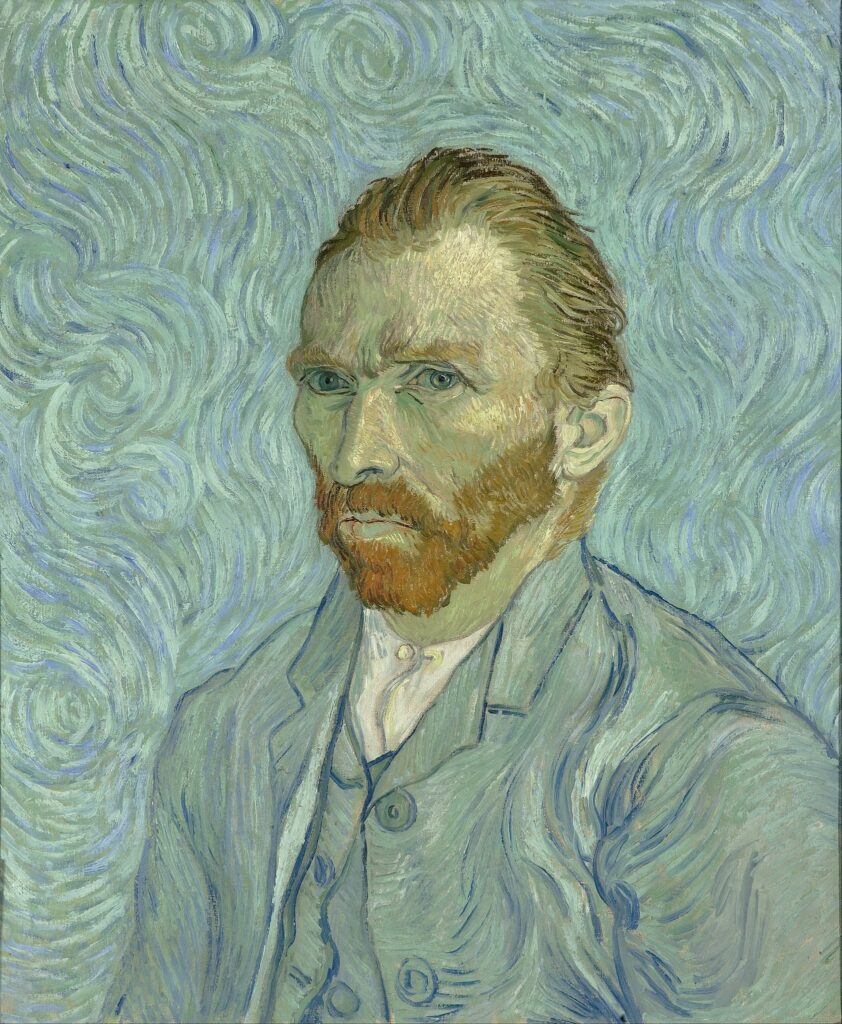
Vincent van Gogh spent two years in Provence, first in Arles and then at a mental asylum in St-Rémy-de-Provence. In his works we see the people and landscape of the time, filtered through the lens of his unique artistic style. But what did they really look like? A new photographic collection now lets us see for ourselves.

Sisters Emile, Alexandre, and Augustin Sicard were talented amateur photographers at the turn of the last century. They took hundreds of photos in and around St-Rémy just a few years after Van Gogh lived there. Looking at their photos gives us a picture of his world.

Read all about it in Perfectly Provence!

Van Gogh in St-Rémy

St-Rémy’s most famous former resident is undoubtedly Vincent van Gogh, who spent a year here as a mental patient after cutting off his ear in Arles. While in St-Rémy, he painted several masterpieces, including Irises and The Starry Night.

The place where Van Gogh was interned, Saint-Paul de Mausole, has recently been refurbished. So, you can now see it much as it was during Van Gogh’s time, with not only Van Gogh’s room but also where other patients lived, his doctor’s office, some of the “treatment” rooms, and more. It’s a must-see for visitors to the area, especially those interested in the great artist’s life.

Read all about it in Perfectly Provence!

The French Father of Fairy Tales

Have you ever wondered where the story of Sleeping Beauty came from, or Little Red Riding Hood, or Puss in Boots? These stories we love today all sprang from the fertile imagination of Charles Perrault, an official in the court of King Louis XIV. And while today such fairy tales are thought of as children’s stories, their original audience was none other than the aristocracy of France.

From Lawyer to Writer

Charles Perrault was born in 1628 to a wealthy bourgeois family. He trained as a lawyer but loved to write, and his poems honoring King Louis XIV brought him to the attention of the monarch. He was hired as the secretary to Jean-Baptiste Colbert, Louis’ powerful minister, and became a fixture at the court. But after 20 years of service, Perrault retired and dedicated himself to writing.

Thus in 1697 appeared Histoires ou contes du temps passé, avec des moralités (Stories or tales of the past, with morals). This was a collection of eight fairy tales, most of which have become classics: Sleeping Beauty, Little Red Riding Hood, Puss in Boots, Cinderella, Bluebeard, Hop ‘o My Thumb, Diamonds and Toads, and Ricky of the Tuft. Perrault’s book was so popular that it went through multiple printings in his lifetime, and today the stories are beloved worldwide.

Was Perrault the Real Author?

One question that scholars ask is, how could one man have come up with so many great stories? Did Perrault base them on existing folk tales, or perhaps something else?

Folk tales were probably not the source. Clapbooks were common at the time—inexpensive books aimed at a popular audience. They told simple tales in simple language and often reflected the folk tales of the day. But Perrault’s stories are not found among them.

What seems most likely is that he based his stories on older tales by medieval authors, and sometimes even the ancient Greeks. For example, Little Red Riding Hood bears a striking resemblance to the 14th-century Italian fable The False Grandmother. And history has many Cinderella-type stories, the first known one going all the way back to ancient Egypt and recorded by the Greeks as Rhodopis.

A Talented Pen

What sets Perrault’s tales apart from these earlier ones is his talent as an author. While he may have based his stories on earlier works, his pen brought them brilliantly to life. The court of Louis XIV loved fairy tales, and prized stories that were told with préciosité—refined language and great embellishments. This is where Perrault shined, writing for the most sophisticated audience in Europe. His stories were a hit with Louis’ court and found their way throughout France, and eventually Europe.

Part of the tales’ popularity, especially among the elite, is because they reinforced the morality of the day. The aristocracy was presented as superior to the sometimes-doltish peasants. Women had to be reminded of their place: Sleeping Beauty was punished for her curiosity with a century-long sleep. And in case anyone missed the lesson of “don’t talk to strangers,” in Perrault’s version of Little Red Riding Hood, when the wolf eats the little girl, the story ends!

Mother Goose

Perrault is also the father, so to speak, of Mother Goose. His book of fairy tales was subtitled Contes de ma mère l’Oye (Tales of my mother Goose) and the name of Mother Goose caught on. It became popular in Britain after Perrault’s book was translated there, then crossed the Atlantic to the United States. Mother Goose has been associated with children’s stories in the English-speaking world ever since.

So the next time you read Puss in Boots to your kids, or watch Disney’s Sleeping Beauty together, you can tell them that the story first entertained the most glittering court in Europe.

Jean Moulin, One of France’s Greatest Heroes

There is an excellent small museum near where Val and I live in St-Rémy that recounts the life of World War II hero Jean Moulin. It is well worth a visit if you are in the area.

For those unfamiliar with him, Jean Moulin is the man who unified the French Resistance before being captured by the Nazis. Despite being tortured and beaten, Moulin never revealed any secrets.

Today, his ashes are in the Pantheon in Paris, the final resting place of France’s greatest heroes, and his name is found throughout the country—only de Gaulle and Pasteur have more streets named after them.

The museum recounts Moulin’s life and has a brilliant re-creation of the night he parachuted in the middle into the mountains near St-Rémy–it is like you are there!

Read more about this great Frenchman in Perfectly Provence!

France and the Cultural Iceberg

Imagine watching a video of a woman walking down a city street with a baguette under her arm. She’s wearing a beret and a chic scarf, and as she passes an outdoor café you can hear an Edith Piaf tune playing.

Now imagine another video, this time of a man walking down the street of a rural town. He’s wearing a cowboy hat and boots and he passes a burger joint before climbing into his pickup truck.

Most people would guess that the woman is in France and the man in the United States, because of all the clues that are easy to pick out: their clothing, the food, the music, the truck, and more. 

All these clues form the tip of what is called the “cultural iceberg.” Anthropologist Edward Hall coined the term in 1976 because he saw culture as being similar to an iceberg—some of it clearly visible, some parts visible but in a vague way, and much of it invisible and mysterious.

How does this idea apply to France? Find out at France Today!